
When AI Started Asking Bigger Questions
A few weeks ago, while flipping through a magazine during a layover, I stopped cold on a simple question buried midway through an article: What happens when the people building AI decide to reinvent energy itself?
It was one of those lines that lingers long after you close the page. And the more I sat with it, the more I realized we may be living through the most radical shift in energy innovation since the dawn of electricity.
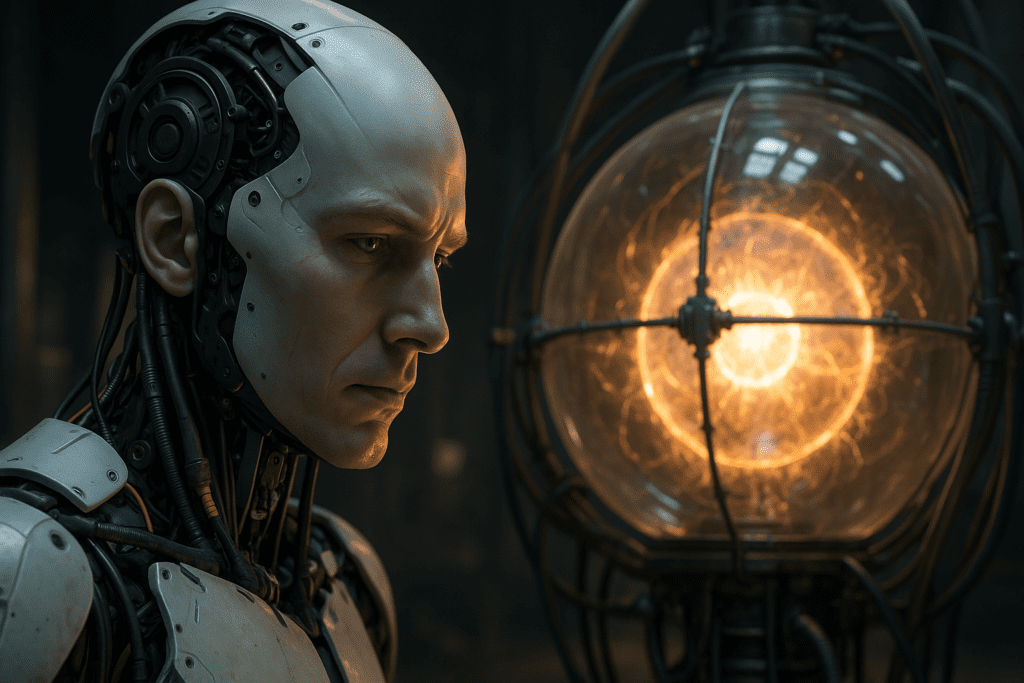
The New Energy Gold Rush
The article dove into nuclear fusion, but not the decades-away fusion most of us grew up hearing about. This was something entirely different: a private-sector arms race being led by the same minds pushing artificial intelligence forward.
Companies like Helion Energy, Commonwealth Fusion Systems, and OpenStar aren’t just trying to crack fusion. They’re betting billions that they can turn it into a functioning power source within the next decade. That confidence alone is striking.
Helion’s approach grabbed me most. Instead of the typical magnetic bottle that many labs use, Helion plans to smash two plasmas together at nearly a million miles an hour. If it works, they believe they can hit engineering break-even by producing not just hot plasma, but actual electricity, ready for the grid. And they’ve already signed a contract to deliver energy to Microsoft.
As David Kirtley, Helion’s CEO, put it to Time:
“Our goal is to build a generator per day and deploy fusion systems all over the world.”
Ambitious doesn’t begin to cover it.

Why AI Is Suddenly the Star of the Show
The part that surprised me most was how intertwined AI has become with fusion research. Not just as a tool, but as a driver of demand.
“In the mid-2030s, AI could be the number one reason we need new power sources,” said Troy Carter of Oak Ridge National Laboratory. And it makes sense. Training giant AI models requires energy on a scale our current grid wasn’t built to support.
What shocked me was the feedback loop:
• AI accelerates fusion research
• Fusion promises the energy AI will require
• And the world, stuck between climate pressures and rising demand, is desperate for both
This isn’t just science. It’s economics, geopolitics, and survival woven together.

What Stood Out Most to Me
Here are the key ideas that stayed with me after finishing the piece:
- Private capital has replaced governments as the primary fuel for fusion.
- Engineering break-even is no longer theoretical. Some prototypes were within a hair of it in 2024.
- Fusion without massive energy storage could reshape renewable reliability.
- If fusion becomes scalable, world politics shift. Energy scarcity has shaped nearly every modern conflict.
A quote from MIT’s Nuno Loureiro summed it up:
“AI has made some very challenging problems in the plasma space more accessible.”
The convergence of these fields feels like watching two tectonic plates lock together.
The Bigger Question
If these fusion startups succeed, the cost of energy could collapse. Entire industries would reorganize. Nations built on oil might have to reinvent themselves. And AI, no longer constrained by energy limits, could evolve faster than expected.
The question that kept echoing after I closed the magazine was simple:
Are we ready for what unlimited energy would unleash?
Because if even one of these companies hits its milestone, the world we know will tilt. And unlike previous revolutions, this one won’t wait for us to catch up.
If you’re curious about where the future is headed, keep an eye on the fusion companies nobody had heard of ten years ago. The next great leap might not come from a lab or a government facility, but from a warehouse in Washington or a startup in New Zealand.
And when the lights of the next era flicker on, we’ll look back and realize the shift didn’t begin in a power plant.
It began in the minds of the people who dared to imagine energy without limits.
And while fusion may still be a few years from reshaping the world’s energy grid, one thing is already clear. We’re entering an era where smarter systems will determine who adapts and who gets left behind. The companies preparing for that shift aren’t waiting for limitless power. They’re building intelligent tools today that help them move faster, operate leaner, and stay competitive in a marketplace that changes by the month.
That’s where AI becomes a practical force rather than a distant theory. If you want to see how automation can create real momentum in your business right now, tools like Vengo’s AI Agents give you a front-row seat. They capture leads, respond instantly to customers, and work around the clock without the overhead that slows so many teams down.
Fusion may define the long horizon. But the way you leverage AI today will determine whether you’re ready for that future when it arrives.